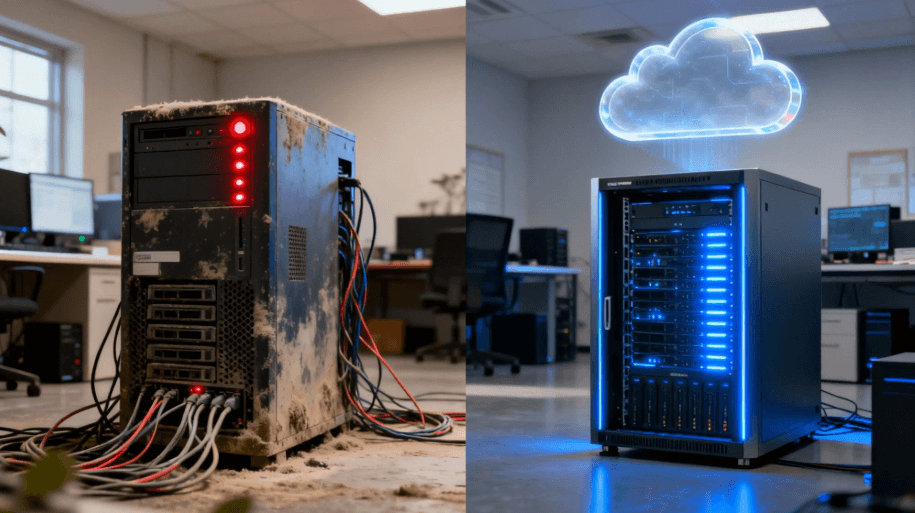
You log into your computer on a Monday morning, and your team is already jumping between five different file-sharing applications. Your company’s software budget is spiraling out of control, yet no one seems to know what tools are actually being used. This overwhelming mess of uncoordinated, overlapping cloud applications is actively damaging your bottom line and destroying your team’s efficiency.
This scenario is incredibly common for growing businesses. As one expert notes, the rapid expansion of cloud technologies often leads to “bad sprawl,” resulting in unused space, underutilized compute, and unchecked storage growth that weighs down organizations financially. When different departments adopt software in silos, the entire company suffers from bloated expenses and a disorganized infrastructure.
Once you realize how much of your budget is bleeding into unused or overlapping software, the next logical step is finding a partner who can audit and consolidate your infrastructure. For businesses in the area, partnering with specialized technical infrastructure consultants is the fastest way to turn a chaotic tech stack into a streamlined, cost-effective engine for growth. Consolidating your cloud infrastructure with a proactive IT partner will drastically reduce costs, close dangerous security gaps, and restore employee productivity.
Key Takeaways
- Cloud sprawl and disjointed applications are actively draining your budget and destroying employee focus.
- Centralizing your cloud environment eliminates redundant subscriptions and secures data against shadow IT vulnerabilities.
- Open-source virtualization platforms like Proxmox offer enterprise-grade infrastructure without massive hardware and licensing costs.
- Transitioning to a proactive, flat-rate IT model provides long-term technological resilience and predictable budgeting.
The Hidden Costs of Disjointed Cloud Apps
A fragmented software environment does not just look messy on an expense report. It actively harms your daily operations. Understanding exactly how this sprawl damages your business is the first step toward regaining control.
Bleeding Budgets and Redundant Subscriptions
When departments operate independently, they frequently purchase their own software tools to solve immediate problems. The marketing team might buy a specialized project management tool, while the operations team subscribes to a nearly identical platform. Over time, these individual buying decisions create a massive web of overlapping subscriptions.
This lack of centralized oversight causes a severe financial impact. You end up paying for unused licenses, abandoned accounts, and duplicate features month after month. The numbers paint a clear picture of this widespread problem. Gartner reports that 69% of IT leaders overspend on their cloud budgets due to a lack of control and optimization.
If your infrastructure was properly audited, this wasted spend could be immediately reallocated to actual growth initiatives. Research backs this up, showing that organizations waste up to 30% of their cloud spend due to inefficiencies like cloud sprawl. A consolidated system ensures you only pay for the exact tools your team needs to succeed.
The Productivity Killer: App-Switching Fatigue
Beyond the financial drain, a fragmented tech stack creates daily operational friction. Employees waste valuable hours every week just trying to locate specific data. They have to remember if a client file was shared in Slack, uploaded to Google Drive, emailed via Outlook, or dropped into a random shared folder.
This constant context-switching completely breaks an employee’s concentration. The loss of efficiency is staggering when you look at the daily data. The average knowledge worker toggles between applications over 1,200 times per day, leading to severe focus fatigue and productivity loss, according to the Harvard Business Review.
A streamlined tech stack directly correlates with higher output and better employee morale. When your team has a single, organized environment to do their work, they spend less time searching for files and more time delivering results. Simplifying their workflow removes a major source of daily frustration.
Shadow IT and Unseen Security Threats
Disjointed software environments also create severe cybersecurity vulnerabilities. When official company systems are clunky or difficult to use, employees often take matters into their own hands. They start adopting unsanctioned, unmonitored applications to bypass company protocols, a practice known as “shadow IT.”
Shadow IT is incredibly dangerous because it completely bypasses your organization’s security and compliance measures. If an employee uses a free, insecure web app to convert a sensitive client document, your business is instantly exposed to a data breach. You cannot protect data that you do not know exists.
Positioning a centralized, officially managed IT environment is the only way to regain visibility over your network. When all tools are vetted and managed by IT professionals, you secure critical business data and eliminate the risks associated with rogue software.
The Power of Centralization: Regaining Control of Your Cloud
Migrating your disjointed systems into a unified environment immediately resolves the fatigue of app-toggling and the severe risks of shadow IT. Instead of managing twenty different vendor relationships, you manage one cohesive ecosystem. This shift transforms your technology from a daily headache into a strategic asset.
Centralization also allows for robust Disaster Recovery and Business Continuity planning. When your data is scattered across dozens of random cloud apps, backing it up comprehensively is nearly impossible. A centralized cloud ensures that if a disaster strikes, your business data is completely backed up and can be restored quickly to keep your operations running.
A unified ecosystem is fundamentally easier and cheaper to manage, monitor, and scale as your business grows.
| Feature | Fragmented Cloud Environment | Centralized Cloud Environment |
|---|---|---|
| Cost Management | High waste from overlapping subscriptions. | Optimized spending with zero duplicate tools. |
| Security Visibility | High risk of shadow IT and unmonitored data. | Full visibility and control over all company data. |
| Employee Productivity | Constant app-switching and focus fatigue. | Streamlined workflows in a unified workspace. |
| Disaster Recovery | Difficult to back up scattered data sources. | Comprehensive, automated backups for all systems. |
Enterprise-Grade Infrastructure Without the Enterprise Price Tag
Many operations directors assume that centralizing and upgrading their infrastructure requires a massive capital investment. They picture expensive servers and endless licensing fees from massive legacy tech brands. Fortunately, modern open-source solutions provide a much better path forward.
Why Richmond Businesses are Turning to Proxmox
Proxmox is an open-source virtualization platform that allows businesses to centralize their server management easily. In simple terms, virtualization lets you run multiple independent servers on a single piece of physical hardware. This eliminates the need to buy a separate physical machine for every single business application you run.
Unlike standard proprietary solutions, Proxmox drastically reduces your reliance on physical hardware while eliminating expensive software licensing fees. You get the same level of performance, reliability, and security as massive enterprise systems, but at a fraction of the cost. This makes it an ideal solution for growing companies that need to scale efficiently.
Implementing Cost-Effective Cloud Computing
A specialized local partner can seamlessly migrate your business to a virtualized Proxmox environment. They handle the technical heavy lifting, ensuring your data is moved securely with minimal downtime. This provides your business with enterprise-level control and performance on a mid-sized business budget.
To fully capitalize on these architectures, local companies trust the professional IT services in Richmond provided by Transparent Solutions. Partnering with a dedicated team for reliable managed IT services allows your business to eliminate technical bottlenecks and achieve maximum uptime. Incorporating specialized infrastructure engineering directly into your broader business continuity strategy turns your local technology stack into a genuine competitive advantage without the burden of surprise overhead costs.
Choosing the Right Local IT Partner for Long-Term Resilience
Fixing a chaotic network requires more than just buying new software. It requires a dedicated partnership with IT professionals who understand your business goals. Knowing what criteria to look for when hiring an IT service provider will save you significant time and money.
Moving from Reactive Fixes to Proactive Strategy
Growing businesses can no longer afford to wait for their disjointed systems to break before calling IT support. The old “break-fix” model means you only interact with your IT vendor when something is on fire. This results in costly downtime, lost productivity, and constant operational stress.
You need a hands-on, local partner who initiates the relationship with a comprehensive network assessment. They should actively look for hidden vulnerabilities, overlapping cloud apps, and hardware bottlenecks before these issues cause a system failure. This approach ensures your technology actually supports your daily operations.
Focusing on long-term strategic technology planning is far more valuable than short-term troubleshooting. A great IT partner sits down with you to plan your technology budget for the next three years, ensuring your infrastructure scales seamlessly alongside your business.
| IT Support Model | Response Style | Business Impact | Financial Predictability |
|---|---|---|---|
| Break-Fix IT | Reactive (waits for failure). | High downtime, reactive stress. | Low (unpredictable hourly bills). |
| Proactive Managed IT | Preventative (stops issues early). | High stability, strategic growth. | High (consistent flat-rate billing). |
Eliminating Surprise Bills with Flat-Rate IT
Unpredictable expenses are a major source of anxiety for any operations leader. Under traditional hourly billing models, every IT emergency results in an unexpected invoice. You are essentially penalized financially every time your technology fails.
Transitioning to a proactive, flat-rate managed IT services model solves this problem entirely. With flat-rate IT, you pay a single, predictable monthly fee for all your support, monitoring, and maintenance needs. This model removes the fear of calling the helpdesk and keeps your budget strictly under control.
Most importantly, flat-rate pricing aligns the IT provider’s goals directly with yours. Since they do not make extra money when your systems break, they are highly motivated to ensure your network runs flawlessly. Both parties want a stable, secure, and quiet IT environment.
Conclusion
Cloud sprawl and a messy web of disjointed applications are actively harming your company’s bottom line and security. You are likely paying for redundant subscriptions while your employees suffer from the daily fatigue of switching between unorganized tools. This chaotic approach to technology simply cannot scale.
Partnering with a local, specialized expert can turn that chaotic IT environment into a centralized, cost-effective asset. By consolidating your tools and leveraging smart solutions like Proxmox, you can gain enterprise-grade performance without the massive price tag.
Stop paying for overlapping cloud apps and unpredictable hourly IT fixes. Regain control of your budget and your technology today by reaching out to a local expert to request a FREE, comprehensive network assessment.