As a business leader in Atlanta, your daily reality often involves juggling operational fires instead of focusing on long-term strategy. You regularly watch overworked internal staff scramble to fix unpredictable system outages. You might even worry quietly about missing strict compliance standards, knowing that a single audit failure could trigger heavy fines.
Viewing your IT setup as simply the department that “fixes broken computers” is an outdated mindset. This approach actively drains company profits and limits your growth potential. When your network goes down unexpectedly, your entire workforce sits idle while payroll costs continue to accumulate. Your ability to serve clients comes to a grinding halt.
The financial impact of a poorly managed, reactive infrastructure is severe. The average cost of IT downtime is $5,600 per minute or $336,000 per hour, according to Gartner. Every moment your systems remain offline translates directly into lost revenue and a damaged reputation.
Forward-thinking businesses recognize this massive financial risk. They understand that to survive in a competitive market, they must shift away from reactive emergency fixes. Moving toward strategic, proactive IT management ensures your technology supports your business goals instead of actively getting in the way.
Key Takeaways
- Reactive IT support creates massive hidden financial costs through prolonged downtime and expensive emergency fixes.
- Small and medium-sized businesses face severe financial and reputational risks without layered, enterprise-level cybersecurity.
- vCIO-style guidance transforms technology from a reactive cost center into an essential, predictable growth driver.
- Partnering with a local provider ensures rapid, accountable support and a deep understanding of regional operational needs.
The True Cost of the “Break-Fix” IT Model
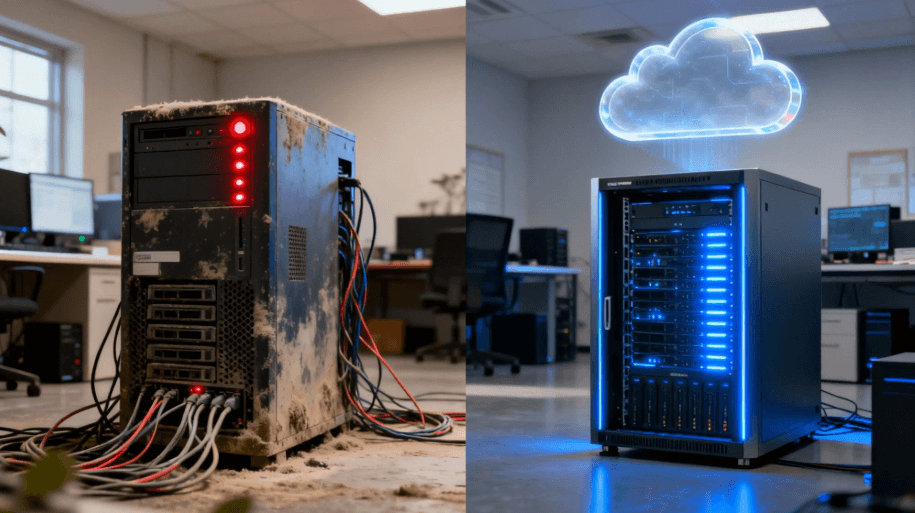
The traditional “break-fix” model is simple: you wait for a system to break, call a technician, and pay a premium to have it repaired. While this might seem cost-effective on paper, it creates dangerous operational blind spots. Waiting for systems to fail stalls revenue generation and guarantees unpredictable expense spikes that ruin quarterly budgets.
This reactive approach also takes a massive organizational toll on your internal staff. When a small in-house IT team spends all its time fighting daily fires, it cannot focus on strategic improvements. This leads to severe operational bottlenecks. Over time, the stress of constant emergencies results in high employee turnover, leaving your business vulnerable when your top IT talent walks out the door.
Instead of waiting for systems to fail and absorbing the cost of lost productivity, forward-thinking businesses are partnering with an Atlanta managed IT provider who understands the specific operational and compliance needs of the region. A local partner steps in to stabilize the environment before disruptions happen.
Shifting to a proactive Co-Managed IT or fully managed model replaces chaotic IT emergencies with predictable, flat-rate stability. Your internal team gets the breathing room they need to focus on user training and internal workflows. Meanwhile, your managed services partner handles the heavy lifting of 24/7 monitoring, patch management, and system optimization.
| Feature | Break-Fix Model | Proactive Managed IT |
|---|---|---|
| Cost Structure | Unpredictable, hourly emergency rates | Predictable, flat-rate monthly fee |
| System Monitoring | None. Action is taken only after failure | 24/7 active monitoring to prevent failure |
| Business Impact | High downtime, lost productivity | Maximized uptime, continuous operations |
| Strategic Focus | None. Purely reactive troubleshooting | High. Aligned with long-term business goals |
The Escalating Cybersecurity Threat for SMBs
Many small and medium-sized business owners hold onto a dangerous myth. They believe their companies are simply “too small to be targeted” by sophisticated cybercriminals. Hackers do not care about the size of your building or your employee headcount. They use automated scripts to scan the internet for vulnerabilities, targeting any network with weak defenses.
The data proves that smaller organizations are directly in the crosshairs. Small businesses represent 43% of all cyberattack targets, according to the Verizon Data Breach Investigations Report. Attackers know that SMBs often lack the budget for full-time security teams, making them prime targets for ransomware and phishing campaigns.
The financial devastation of a network breach can easily bankrupt a growing company. The global average cost of a data breach reached a record $4.88 million, according to the IBM Cost of a Data Breach Report 2024. This figure includes regulatory fines, lost business, system remediation, and the devastating cost of a ruined reputation. Customers simply will not trust a business that cannot protect their sensitive information.
Protecting your operations requires enterprise-level security resources. A managed provider implements layered defense strategies to keep intruders out. This includes Managed Detection and Response (MDR), managed firewalls, and continuous security training for your staff. Furthermore, strict IT regulatory compliance management for frameworks like HIPAA and CMMC ensures your data remains protected from both criminals and costly audit penalties.
Transforming Technology into an Essential Growth Driver
Comprehensive managed IT services do much more than keep the lights on. A mature technology strategy directly aligns your network infrastructure with your long-term business goals, turning a traditional cost center into an engine for revenue growth.
The Strategic Value of vCIO-Style Guidance
A Virtual Chief Information Officer (vCIO) provides executive-level consulting that goes far beyond the scope of a standard help-desk technician. While a help-desk agent focuses on resetting passwords or fixing a jammed printer, a vCIO looks at the entire landscape of your organization. They analyze how data flows through your business and identify areas where technology can eliminate manual labor.
This strategic guidance prevents wasted budget. vCIOs create highly predictable technology roadmaps, strictly aligning your IT budget with your three-to-five-year business goals. This stops the cycle of making piecemeal tech purchases that quickly become obsolete or fail to integrate with your existing systems.
Having this big-picture guidance helps Atlanta businesses scale efficiently. When leadership knows exactly what their IT expenses will be for the next several quarters, they can confidently invest in new markets or hire additional staff. This level of planning provides a distinct competitive edge in a crowded local market.
Protecting Operations with Zero-Downtime Migrations
Business leaders naturally experience deep anxiety when discussing major IT upgrades. The fear of costly operational disruptions and extended downtime often causes executives to delay necessary server replacements. Operating on aging hardware is a massive risk, but the thought of shutting down the business for three days to migrate data feels equally dangerous.
Specialized zero-downtime server migration services eliminate this risk. Experienced IT partners meticulously plan these transitions to occur outside of regular business hours or through mirrored server environments. By leveraging managed cloud solutions, your workforce can seamlessly transition to the new infrastructure without ever noticing the shift.
These seamless digital transformation initiatives allow your core business to continue generating revenue without skipping a beat. You gain the performance and security benefits of modern hardware and cloud environments without the traditional pain of widespread operational outages.
Why a Local “Hand to Shake” Matters in IT Support
When a critical IT emergency strikes, every second counts. Dealing with a slow, faceless, outsourced call center is incredibly frustrating. You often find yourself repeating the same issue to three different technicians while your staff stands around, unable to work. This disconnected support model treats your business like a ticket number rather than a valued partner.
Having a local IT partner with a physical presence in the metro Atlanta area provides a distinct operational advantage. If a server fails or a network switch burns out, you need someone who can dispatch an engineer to your office immediately. Rapid, on-site assistance is a logistical reality that an overseas call center simply cannot offer.
Local accountability builds deep trust. Having “a real hand to shake” ensures you are engaging in a true partnership rather than a transactional vendor relationship. Your provider gets to know your office layout, your staff, and your specific daily challenges.
The most effective local providers offer the perfect blend of resources. They deliver personalized, SMB-focused care with the backing of enterprise-level resources. You get the local touch you desire alongside the power of 140+ engineers and 24/7/365 managed help desk support, ensuring your business is always protected.
Conclusion
Tolerating unpredictable downtime, reactive fixes, and overburdened staff is a massive hidden cost that actively stifles your business growth. Continuing to rely on the outdated break-fix model leaves your organization highly vulnerable to expensive outages and severe cybersecurity threats.
Proactive IT management changes the entire trajectory of your operations. By implementing layered cybersecurity, leveraging strategic vCIO alignment, and partnering with a local team for rapid accountability, you secure your most valuable data. Your technology stops being a source of daily frustration and becomes a reliable foundation for expansion.
Atlanta business leaders must stop worrying about recurring tech failures and start demanding more from their infrastructure. Evaluate your current IT setup today. Seek out a proactive, local partner who can secure your daily operations and help you use technology as a strategic, predictable asset for the future.